Vaar Aasaa start here
Find the Vaar Aasaa album on your favorite streaming platform:






Vaar Aasaa holds the light and courage our mind needs to overcome the pain and laziness that we encounter each day. It has the power to heal the deepest pain and shine the brightest light within us. It was given as a blessing to humanity to unfold and share the true Wisdom of Life.
The Source
The Vaar of Raag Aasaa can be found in the Siri Guru Granth Sahib from page 463 - 475.
Shaan
The opening Shaan, an instrumental composition, serves to attune the mind to the upcoming conversation with the soul. Its rhythmic elements give voice to the wandering thoughts of the mind, gradually bringing them to the center and opening the mind’s heart to the wisdom of the Sabd. Before we are ready to truly wind down and drift into peaceful sleep, it's time to listen to the mind's voice. Composed in Raag Aasaa, the musical mood that opens the Vaar Aasaa, the Shaan initiates an inner conversation in an inspiring light.
Prologue
This project is humbly dedicated to the sacred healing power of the Sri Guru Granth Sahib Ji.
I present this recording with sincerest gratitude to my Vidya Guru, the late Mahant Ajit Singh Ji, for teaching and sharing with me the traditional rendition of Vaar Aasaa and Tunday Asraajay Ki Dhunni in Raag Asa.
My research into Vaar Asa started with a very precious memory, which took place in my village, Sidhwan Dona in Punjab when I was just 12 years old. It was at this time when I had the honour of studying with Mahant Ajit Singh Ji. He shared with me many rare and authentic elements of the Sikh Music tradition, which with modernization have become almost extinct. The first time I heard him sing the Vaar of Asa I was so overcome by the impact it had on me, I was lost for words but I knew I had to learn this. From there, my journey began. As I asked questions, I received answers with references from the Siri Guru Granth Sahib. When I asked why it sounded so different, Mahant Ji responded by showing me the text of the vaar written in the Guru Granth Sahib and explained how clearly the instructions are written in the title. He said "all we sang was exactly what we are being told to sing in the title".
I realized the value of simplicity and understood that by following the instructions in the Sabd title, the psyche can be impacted so profoundly. This was the inspiration I needed to learn more and practice this beautiful music in the simplest and most powerful way.
This memory is no doubt one of my dearest and most valuable. Now after 30 years, I've gathered the strength to dare to replicate and sing the Vaar of Raag Aasaa as I once heard from the mouths of such great inspirational souls.
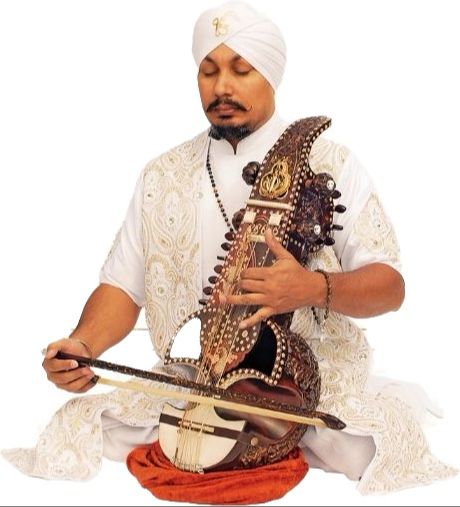

Nowadays, few if any Sikh musicians know or practice the traditional structure of singing a vaar. To begin with, the instructions clearly written in the title are to be followed.
In this case the title clearly states to sing the vaar only in Raag Aasaa and use the tune of Tunda Asraaja. Secondly, the traditional practice of singing a vaar involves using the simplest pattern throughout the complete vaar; where the saloks are sung as alaaps using no defined rhythm or set melody and the pauris use a set tune, in this case the tune of Tunda Asraja, with a set rhythmic pattern which is repeated for each pauri.
The raag that is assigned to the vaar is to be used for the entire vaar from start to finish,
Finally it is important to make sure that the vaar is being sung as it is presented in the Siri Guru Granth Sahib without making any alterations or additions to the poetry.
In the significance of Siri Guru Granth Sahib, this tune of Tunda Asraaja is sung for this specific vaar, to encourage strength and victory during our daily battle of life, while reminding us to always seek inner inspiration.
Vaar Aasaa was a fundamental part of a Sikh's daily discipline from the time of Guru Arjan Dev Ji. During the most challenging days that our ancestors faced in the battle fields of Chamkaur and Bhangani they never gave up their practice of Vaar Aasaa.
It gave the Sikh warriors the strength and spiritual focus they needed to achieve their victory.